
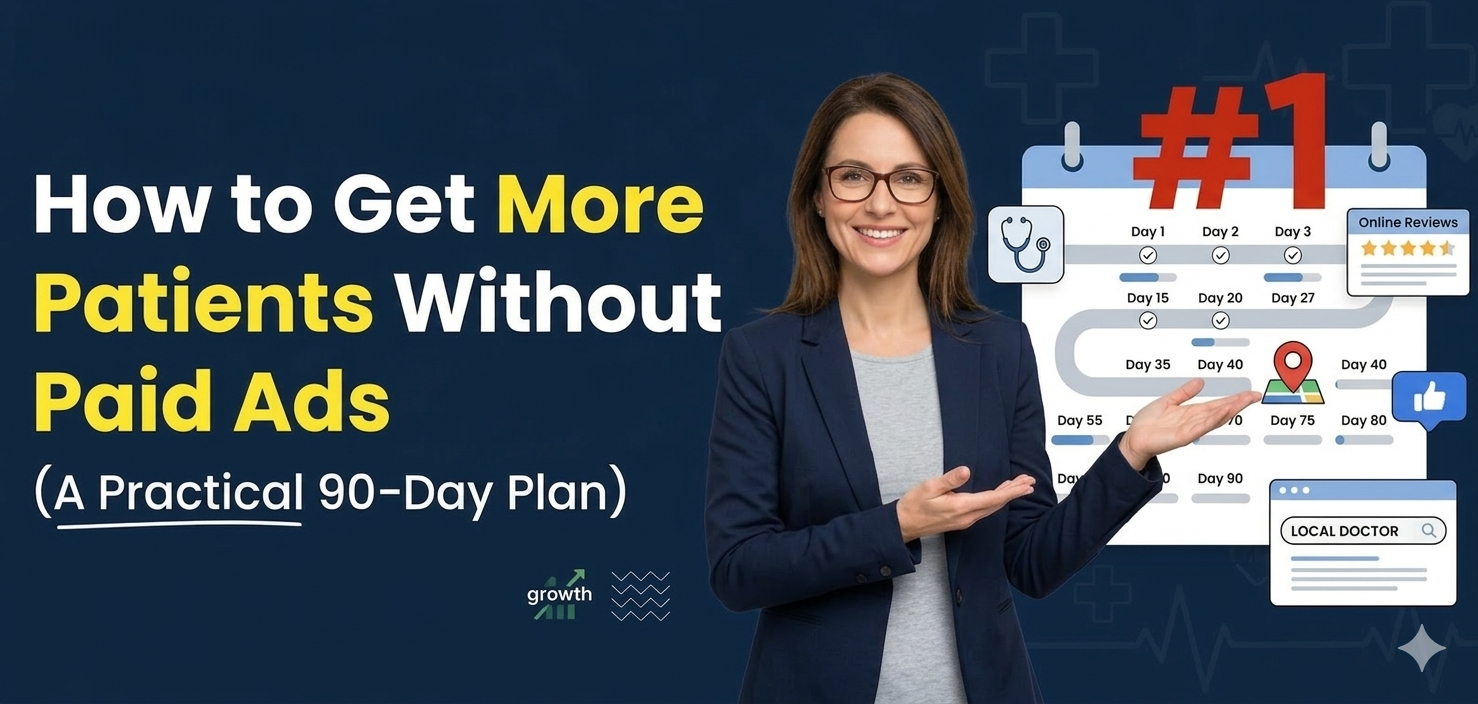
For many private doctors, attracting new patients online has become increasingly expensive. Paid advertising platforms such as Google Ads can certainly generate enquiries, but they come with a major drawback: the moment you stop paying, the leads disappear.
This is why more and more private practices in the UK are shifting their focus toward organic search visibility.
When someone searches for:
“private GP near me”
“dermatologist London”
“child psychiatrist Manchester”
“private doctor consultation Birmingham”
they are not browsing casually. They are actively looking for medical help. Appearing in those search results places your clinic directly in front of high-intent patients who are ready to book an appointment.
This is where Medical SEO becomes one of the most powerful long-term patient acquisition strategies available to private doctors.
Unlike paid advertising, SEO builds sustainable visibility that continues to generate enquiries long after the initial work is completed.
In this guide, we will explore how private doctors can implement a 90-day SEO roadmap to improve their online presence, increase local search rankings, and attract more patients organically.
Why Organic Search Is the Most Valuable Source of Patients
While SEO is a long-term strategy, meaningful improvements can often be achieved within the first three months.
The first 90 days are typically focused on building the foundational signals that search engines use to evaluate healthcare providers.
Month 1: Building the Foundation
The first stage of medical SEO focuses on establishing clear signals of relevance and credibility.
For private doctors, the most important digital asset is their Google Business Profile, which determines visibility in Google Maps results.
A fully optimised profile includes:
correct medical category selection
detailed service descriptions
accurate opening hours
high-quality clinic photos
consistent contact information
Equally important is encouraging early patient reviews. Reviews not only influence potential patients but also act as a strong ranking signal in local search results.
During the first month, doctors should also ensure their website communicates their expertise clearly. Search engines rely on website content to confirm what services a practice offers.
Instead of a single generic services page, a well-structured medical website typically includes dedicated pages for key treatments and consultations. These pages help search engines connect the practice with relevant patient searches.
Technical improvements during this phase are also essential. Fast loading speeds, mobile-friendly design, and secure browsing are all factors that contribute to stronger search rankings.
By the end of the first month, the clinic’s online presence should clearly answer three questions:
What services does this doctor provide?
Where is the clinic located?
Why should patients trust this provider?
Once these signals are established, search engines begin to treat the clinic as a credible local healthcare provider.
Month 2: Expanding Visibility Through Content
The second phase of medical SEO focuses on increasing the number of search queries your clinic can appear for.
Many healthcare searches are informational in nature.
Patients frequently search for answers to questions such as:
“When should I see a private GP?”
“Symptoms of anxiety in children”
“Treatment options for chronic back pain”
Clinics that publish helpful educational content addressing these topics often attract large volumes of search traffic.
From an SEO perspective, this content demonstrates Experience, Expertise, Authority, and Trustworthiness (E-E-A-T) — principles that Google prioritises heavily in healthcare-related topics.
A well-structured clinic blog can therefore become a powerful tool for both patient education and search visibility.
During this phase, private doctors should focus on publishing articles that address common patient concerns within their specialty. These articles not only help patients but also expand the clinic’s reach across a wider range of search queries.
In addition to blog content, building local authority signals becomes important during this stage. Mentions on medical directories, healthcare platforms, and local websites strengthen the clinic’s digital credibility.
Over time, these signals help search engines recognise the practice as an authoritative healthcare provider within its geographic area.
Month 3: Strengthening Authority and Patient Acquisition
By the third month, the clinic’s SEO foundation and content structure should already be in place.
The focus now shifts toward strengthening online authority and patient conversion signals.
One important factor is the accumulation of patient reviews. Clinics that consistently receive positive feedback tend to appear more prominently in local search results.
Encouraging reviews after successful consultations can steadily improve both visibility and trust.
Another key factor during this phase is local link building. When reputable websites reference your clinic — whether through articles, partnerships, or local community involvement — search engines interpret these mentions as signs of authority.
Finally, doctors should begin analysing the performance of their SEO efforts.
Tracking metrics such as:
website traffic from search engines
phone calls from Google Maps
appointment bookings generated from organic traffic
provides valuable insight into how patients are discovering the clinic online.
These insights allow practices to refine their strategy and focus on the search queries that generate the most patient enquiries.
How Long Does Medical SEO Take to Show Results?
SEO is not an instant solution, but it is one of the most sustainable growth strategies available to healthcare providers.
Many private clinics begin seeing early improvements in visibility within two to three months. In competitive cities, stronger results typically appear between three and six months.
The key advantage of SEO is that results compound over time.
A well-optimised website and strong Google Business Profile can continue generating patient enquiries long after the initial optimisation work is completed.
The Future of Patient Acquisition for Private Doctors
Healthcare search behaviour is evolving rapidly.
Patients increasingly rely on online research when choosing healthcare providers, comparing clinics based on:
search visibility
patient reviews
website credibility
Practices that invest in strong digital visibility today are positioning themselves for long-term growth.
Private doctors who appear prominently in local search results often enjoy a consistent flow of patient enquiries without relying heavily on paid advertising.
In many ways, search engines have become the new front door of modern healthcare practices.
Ensuring your clinic appears when patients search for help is one of the most important steps in building a thriving medical practice.
Final Thoughts
Medical SEO is not about gaming search algorithms or chasing short-term tactics.
It is about building a strong online presence that reflects the expertise, professionalism, and trustworthiness of your practice.
By following a structured 90-day strategy — optimising your Google Business Profile, publishing helpful content, and strengthening online authority — private doctors can dramatically improve their visibility in search results.
For clinics looking to grow sustainably, organic search often becomes the most reliable pathway to attracting new patients.
Want to See How Your Clinic Performs Online?
At SEOfix, we specialise in helping private doctors across the UK improve their search visibility and attract more patients through SEO.
If you’re curious about how your practice compares with competitors in your area, we offer a free SEO analysis for medical clinics.
Our team will review your website, Google Business Profile, and local competition to identify the opportunities that could bring more patients to your practice.
👉 Request your free clinic SEO report today.